 Request Appointment
 Office Hours
 Email Us


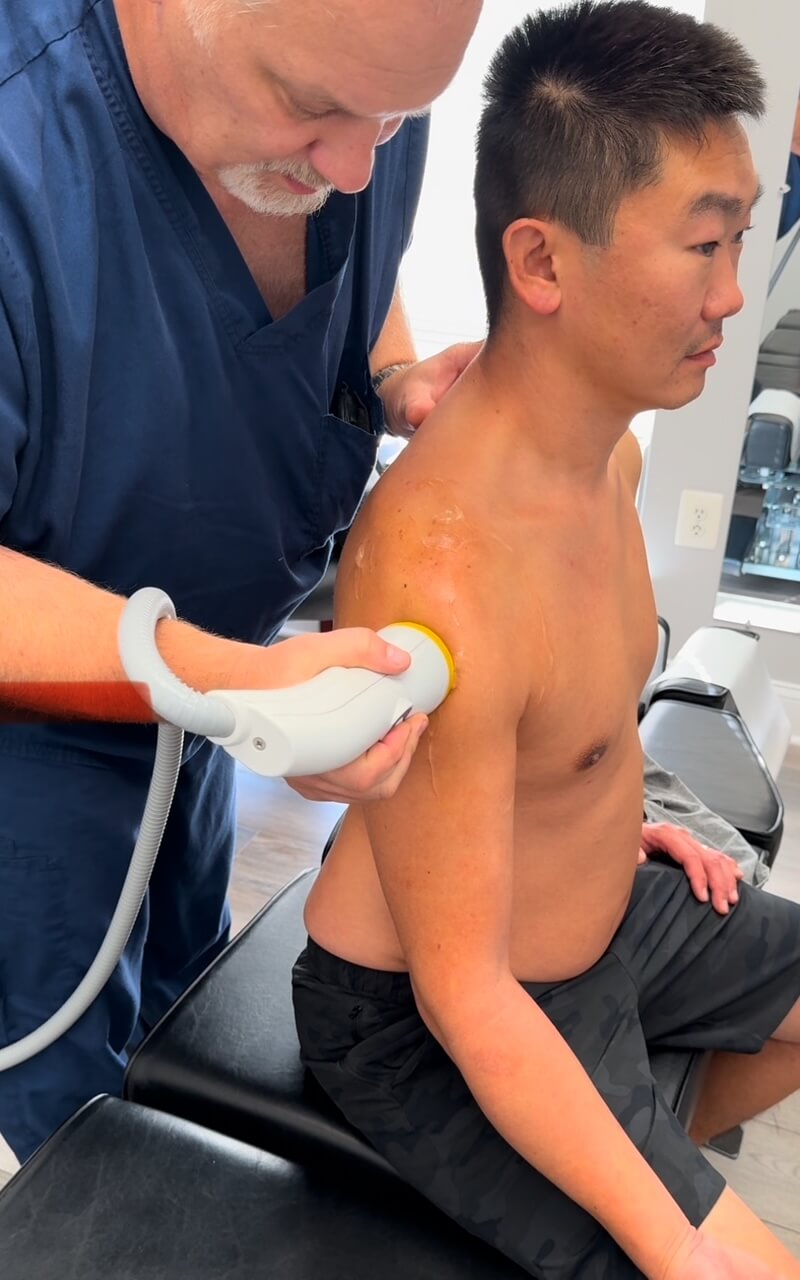
Softwave TRT For Shoulder Pain
Shoulder Pain Doesn’t Always Mean You Need Surgery
Shoulder pain can turn even the simplest daily activities into frustrating challenges. Reaching overhead, putting on a jacket, lifting groceries, playing golf, or simply trying to sleep comfortably can become difficult when your shoulder isn’t functioning properly.
For many patients, the pain starts gradually. Others develop symptoms following an injury, repetitive activity, or years of wear and tear.
Regardless of how it begins, one thing is certain: shoulder pain can significantly interfere with your quality of life.
Unfortunately, many patients believe their only treatment options are anti-inflammatory medications, cortisone injections, or eventually surgery.
But what if there were another way?
At Central Jersey Spine & Wellness in Freehold, NJ, Dr. Gerard DeBernardis offers an advanced, non-surgical approach to shoulder pain that combines several therapeutic technologies designed to reduce pain, improve function, and support the body’s natural healing processes.
These include SoftWave TRT shockwave therapy, Extracorporeal Magnetotransduction Therapy (EMTT), Class IV Laser Therapy, and targeted physical therapy.
Rather than relying exclusively on temporary pain relief, our goal is to address the underlying musculoskeletal problem and create an environment that supports tissue recovery.
What Are the Most Common Causes of Shoulder Pain?
The shoulder is one of the most mobile joints in the human body. Unfortunately, that extraordinary range of motion also makes it vulnerable to injury and degeneration.
Some of the most common conditions we evaluate include:
1. Rotator Cuff Tendinitis and Tendinopathy
Repetitive movements, overuse, and age-related changes can affect the tendons responsible for stabilizing and moving the shoulder.
Symptoms often include pain when lifting the arm, weakness, and difficulty sleeping on the affected side.
2. Rotator Cuff Tears
Partial and full-thickness tears can occur from injury or gradual degeneration.
Not every rotator cuff tear requires surgery. Many patients, particularly those with degenerative tears, can improve with appropriate non-surgical rehabilitation.
3. Shoulder Bursitis and Subacromial Pain
Irritation of the cushioning bursa and surrounding tissues can cause painful shoulder movement, especially when reaching overhead or away from the body.
4. Frozen Shoulder (Adhesive Capsulitis)
This condition causes progressive stiffness, pain, and significant loss of shoulder motion.
Recovery can take months, and appropriate treatment often includes mobility exercises and rehabilitation.
5. Shoulder Arthritis
Degeneration of the shoulder joint can produce pain, stiffness, inflammation, and limited mobility.
Non-surgical treatments may help manage symptoms and preserve function.
Other common causes include biceps tendinopathy, calcific tendinitis, acromioclavicular joint arthritis, and pain referred from the cervical spine.
The key to successful treatment is identifying which structures are contributing to your pain and developing a plan that addresses your specific condition.
Traditional Shoulder Pain Treatments: Why Relief May Not Last
For decades, conventional treatment for shoulder pain has often followed a familiar pattern: medications, injections, physical therapy, and potentially surgery if symptoms persist.
While these treatments have an important place in medical care, each has limitations.
Anti-Inflammatory Medications: Reducing Pain Doesn’t Necessarily Repair Injured Tissue
Nonsteroidal anti-inflammatory drugs (NSAIDs), including ibuprofen and naproxen, are frequently recommended for shoulder pain.
These medications can reduce pain and inflammation, making everyday activities more tolerable.
However, they do not directly repair a damaged rotator cuff tendon.
Prolonged or inappropriate NSAID use can also increase the risk of gastrointestinal bleeding, kidney problems, cardiovascular complications, and elevated blood pressure.
Controlling pain is important, but pain relief alone doesn’t necessarily mean the underlying injury has healed.
Cortisone Injections: Temporary Relief With Potential Trade-Offs
Corticosteroid injections are commonly used for rotator cuff-related pain, bursitis, and other inflammatory shoulder conditions.
For some patients, these injections provide meaningful short-term relief.
However, the benefits may diminish over time, and repeated injections are not without risks.
Potential concerns include:
- Temporary symptom improvement without repairing an injured tendon.
- Tendon weakening or adverse effects on tendon cells with repeated exposure.
- Temporary increases in blood sugar, particularly in patients with diabetes.
- Possible adverse effects on tendon healing and surgical outcomes when injections are given in certain circumstances.
Laboratory and clinical research has raised concerns about repeated corticosteroid exposure in rotator cuff tissue.
This doesn’t mean cortisone injections are never appropriate. They can be valuable for selected patients. However, their potential benefits should be weighed against the risks, particularly when injections are repeated.
Shoulder Surgery: Sometimes Necessary, but Not Always the First Answer
Rotator cuff repair and other shoulder surgeries can be effective for appropriately selected patients, especially those with certain traumatic tears or substantial functional weakness.
However, surgery also involves potential complications, recovery time, rehabilitation, and sometimes months away from normal activities.
Some patients experience persistent pain or stiffness, and repaired tendons do not always heal completely.
Importantly, research demonstrates that many patients with degenerative rotator cuff tears can achieve meaningful improvements with structured non-surgical treatment.
Before committing to an invasive procedure, it’s worth understanding whether a comprehensive conservative treatment program may be appropriate for your shoulder.
A New Approach to Shoulder Pain: Combining Advanced Technologies With Rehabilitation
At Central Jersey Spine & Wellness, we believe having the right combination of technologies can make an important difference in how shoulder injuries are treated.
Instead of relying on a single treatment, Dr. DeBernardis can combine several non-invasive therapies that address different aspects of pain, tissue irritation, mobility, and rehabilitation.
1. SoftWave TRT: Advanced Shockwave Therapy for Shoulder Pain
SoftWave TRT is an advanced form of extracorporeal shockwave therapy (ESWT) that uses electrohydraulic, broad-focused acoustic shockwaves to stimulate biological responses in injured tissues.
Unlike traditional treatments that primarily suppress pain or inflammation, shockwave therapy is being studied for its ability to influence cellular signaling and processes involved in tissue repair.
Research suggests shockwave exposure may stimulate:
- Cellular signaling associated with tissue recovery.
- Local circulation and blood-vessel formation.
- Biological pathways involved in tendon remodeling.
- Pain-modulating responses.
- Improvements in shoulder pain and function in selected conditions.
SoftWave TRT delivers broad-focused shockwaves that can reach deeper musculoskeletal structures, allowing the clinician to treat a wider tissue region than many superficial pressure-wave devices.
Why is this important for rotator cuff injuries?
Rotator cuff tendons are vulnerable to chronic degeneration and sometimes have limited healing capacity.
Stimulating a biological response in these tissues may provide an additional therapeutic option, particularly when combined with rehabilitation.
SoftWave treatment is non-surgical and generally well tolerated, although temporary soreness or discomfort can occur.
It is important to understand that shockwave therapy has not been proven to reconnect a completely torn tendon or reverse every type of shoulder degeneration.
What Does the Research Say About Shockwave Therapy for Shoulder Pain?
One of the landmark studies was published in the prestigious Journal of the American Medical Association (JAMA).
Gerdesmeyer et al., 2003 — Randomized Controlled Trial
Researchers studied 144 patients with chronic calcific rotator cuff tendinitis.
Patients receiving extracorporeal shockwave therapy experienced significantly greater improvements in shoulder function than those receiving placebo treatment. Improvements were also observed in pain and the size of calcium deposits.
The benefits were evaluated for up to 12 months.
This provided important clinical evidence supporting shockwave therapy for calcific shoulder tendinopathy.
More recently, a 2025 systematic review and network meta-analysis of 33 randomized trials found that comprehensive physical therapy and high-energy shockwave therapy combined with physical therapy ranked highly for improving function in calcific rotator cuff tendinitis.
These studies support the use of shockwave therapy in selected shoulder conditions, particularly calcific tendinopathy. Evidence for noncalcific rotator cuff problems is less convincing, and studies of ESWT do not automatically establish identical outcomes for every SoftWave device.
2. EMTT: Advanced Magnetic Technology for Shoulder Pain and Tendon Injuries
Extracorporeal Magnetotransduction Therapy (EMTT) is another advanced technology available at Central Jersey Spine & Wellness.
EMTT uses rapidly changing, high-energy magnetic fields to interact with tissues without surgery or injections.
Unlike shockwave therapy, which delivers mechanical acoustic energy, EMTT uses electromagnetic energy.
This makes the two technologies fundamentally different and potentially complementary.
EMTT is being investigated for its effects on musculoskeletal pain, cellular activity, and recovery.
Scientific Research Supporting EMTT for Rotator Cuff Problems
One particularly relevant study directly evaluated the combination of shockwave therapy and EMTT for rotator cuff tendinopathy.
2018 — Randomized Controlled Trial of 86 Patients
In this study, patients received either:
- Extracorporeal shockwave therapy combined with active EMTT.
- Extracorporeal shockwave therapy combined with placebo EMTT.
Both groups improved, but patients receiving the combination of active EMTT and shockwave therapy experienced significantly greater reductions in pain and improvements in shoulder function at 24 weeks.
This is especially relevant to our approach because it evaluated the same general combination of treatment modalities used at Central Jersey Spine & Wellness.
2026 — Double-Blind, Placebo-Controlled EMTT Trial
Another randomized study evaluated 126 patients with musculoskeletal conditions, including 43 patients with rotator cuff enthesopathy.
The researchers found that active EMTT improved physical function and reduced pain compared with placebo across the overall study population, with generally favorable results in the shoulder subgroup.
No serious adverse events were reported, although temporary discomfort and skin redness occurred more frequently with active treatment.
These findings are encouraging, particularly for patients with chronic tendon-related shoulder pain. However, EMTT remains an emerging treatment, and larger studies are needed to establish which patients benefit most and how durable the improvements are.
3. Class IV Laser Therapy: Supporting Pain Relief and Recovery
Class IV Laser Therapy is another component of our non-surgical shoulder treatment program.
Also called high-intensity laser therapy, this technology delivers therapeutic light energy to targeted tissues.
The interaction of light with cellular structures is known as photobiomodulation.
Depending on the treatment parameters, laser therapy may help modulate pain, influence inflammatory signaling, and support cellular processes involved in recovery.
For patients with shoulder pain, potential benefits include reduced discomfort and improved tolerance for movement and rehabilitation exercises.
What Does the Science Say About Laser Therapy?
A 2026 systematic review and meta-analysis examining 23 randomized trials of laser therapy for rotator cuff-related shoulder disorders found that laser treatments provided overall pain relief and some improvements in range of motion.
The authors noted that high-level laser therapy showed particular promise for certain shoulder movements, but they also emphasized limitations in study quality and consistency.
Their conclusion supported using laser therapy as an adjunct to structured rehabilitation rather than as a replacement for exercise.
This is why we believe combining technologies with physical therapy makes more sense than relying on a single modality.
Laser therapy may help reduce pain sufficiently for patients to participate more comfortably in the exercises needed to restore shoulder function.
4. Physical Therapy: Restoring Strength, Mobility, and Function
While advanced technologies may help manage pain and support recovery, physical therapy remains one of the most important components of non-surgical shoulder care.
A structured rehabilitation program may include:
- Rotator cuff strengthening.
- Shoulder blade stabilization.
- Mobility and flexibility exercises.
- Progressive tendon loading.
- Postural correction and movement retraining.
- Exercises designed to restore confidence in everyday activities.
Research consistently supports exercise-based rehabilitation as a central treatment for many rotator cuff-related shoulder disorders.
A 2026 systematic review involving 89 randomized trials and 5,532 participants found that targeted shoulder exercises may improve pain and function compared with no treatment, although the certainty of some comparisons was limited.
Our goal is to use physical therapy to restore movement and strength while incorporating additional technologies when they are appropriate for the patient’s condition.
Why Combine SoftWave TRT, EMTT, Laser, and Physical Therapy?
Shoulder injuries are complex. Pain may originate from irritated tendons, degenerative tissue, abnormal movement patterns, muscular weakness, or joint inflammation.
That’s why a one-size-fits-all approach may not be ideal.
At Central Jersey Spine & Wellness, our philosophy is to consider the different factors contributing to shoulder dysfunction and select the therapies most appropriate for each patient.
SoftWave TRT: Acoustic shockwave therapy may be considered for selected tendon conditions and may help stimulate biological responses associated with tissue recovery.
EMTT: Electromagnetic stimulation offers a different non-invasive treatment approach, with emerging clinical research supporting its use for selected musculoskeletal conditions.
Class IV Laser Therapy: Therapeutic light energy may help reduce pain and improve tolerance for rehabilitation.
Physical Therapy: Targeted exercise helps restore strength, flexibility, shoulder mechanics, and functional movement.
The combination is promising, particularly given the research on shockwave therapy plus EMTT. However, the exact four-treatment protocol has not been established as superior to physical therapy alone in large clinical trials.
Our focus is not simply on making the shoulder feel better temporarily. It’s on helping patients recover useful movement, rebuild strength, and return to the activities they enjoy.
Can You Avoid Rotator Cuff Surgery?
For many patients, the answer may be yes.
Not every rotator cuff tear requires surgical repair. Some people have rotator cuff abnormalities visible on MRI without experiencing any pain.
Others have significant symptoms despite relatively modest imaging findings.
The decision to pursue surgery depends on several factors, including the size and type of tear, whether the injury was traumatic, the degree of weakness, age, activity demands, and response to conservative treatment.
Patients with degenerative rotator cuff problems may improve with a carefully designed rehabilitation program.
However, a sudden traumatic injury accompanied by marked weakness or an inability to lift the arm warrants prompt medical assessment, since some tears benefit from early surgical consultation.
For appropriate candidates, a non-surgical treatment program can be a reasonable first step.
Why Choose Dr. Gerard DeBernardis for Shoulder Pain Treatment in Freehold, NJ?
When you’re dealing with chronic shoulder pain, choosing the right provider matters.
It isn’t simply about finding someone who offers a particular treatment. It’s about finding a clinician with the experience, technology, and understanding necessary to develop an appropriate treatment strategy.
Dr. Gerard DeBernardis has spent approximately 30 years helping patients with musculoskeletal pain and injuries.
He has also become one of the country’s highly experienced providers of SoftWave TRT, having performed more than 21,000 SoftWave treatments.
His experience includes:
- 30 years of clinical practice treating musculoskeletal conditions.
- 21,000+ SoftWave TRT treatments performed.
- ISMST Certified through the International Society for Medical Shockwave Treatment.
- Member of the American Society for Medical Shockwave Treatment (ASMST).
- SoftWave Clinical Physician Trainer, helping educate doctors across the United States.
- Extensive experience integrating advanced non-surgical treatment technologies.
- Hundreds of five-star patient reviews.
- Access to multiple complementary technologies within one multidisciplinary practice.
Dr. DeBernardis is not simply offering patients another piece of equipment.
He brings decades of clinical experience together with advanced therapeutic technology and an individualized approach to care.
For patients considering an out-of-pocket investment in advanced treatment, provider experience, appropriate patient selection, and realistic expectations are important considerations.
While no provider can guarantee a particular result, choosing a clinician with extensive hands-on experience can help patients make a more informed treatment decision.
Shoulder Pain Treatment Near Freehold, Manalapan, Marlboro, Howell, and Jackson, NJ
Central Jersey Spine & Wellness is conveniently located in Freehold, New Jersey, and welcomes patients from throughout Monmouth County, Ocean County, and surrounding Central New Jersey communities.
Whether you are searching for:
- Non-surgical shoulder pain treatment in Freehold, NJ.
- Rotator cuff injury treatment near Manalapan or Marlboro.
- Shockwave therapy for shoulder pain in Howell or Jackson.
- SoftWave TRT for rotator cuff tendinitis in Central New Jersey.
- EMTT and Class IV Laser Therapy for shoulder pain.
- Alternatives to cortisone injections or shoulder surgery.
Our office offers an opportunity to explore advanced conservative treatment options under one roof.
Frequently Asked Questions About Non-Surgical Shoulder Pain Treatment
Can SoftWave TRT help a rotator cuff injury?
Shockwave therapy has shown benefits for selected rotator cuff conditions, especially calcific tendinopathy. It may also provide short-term pain relief in some noncalcific tendon problems, although evidence is mixed. It is not a proven method of reconnecting completely torn tendons.
Is SoftWave TRT painful?
Some patients experience discomfort during treatment, especially over sensitive tissues. Treatment intensity can be adjusted, and temporary soreness may occur afterward.
Can EMTT and shockwave therapy be used together?
Yes. Published randomized research has evaluated this combination in rotator cuff tendinopathy, with encouraging improvements in pain and shoulder function compared with shockwave therapy plus placebo EMTT.
Can these therapies replace shoulder surgery?
For selected patients, conservative treatment may improve symptoms enough that surgery is unnecessary. However, some traumatic or advanced rotator cuff injuries require surgical evaluation.
What if physical therapy or cortisone injections haven’t worked?
Persistent symptoms deserve reassessment. In some cases, additional treatment options such as shockwave therapy, EMTT, or laser therapy may be considered alongside an updated rehabilitation program.
How do I know whether I’m a candidate?
The first step is a clinical evaluation. Dr. DeBernardis can review your symptoms, previous treatments, physical findings, and available imaging to help determine whether our non-surgical approach is appropriate.
Don’t Let Shoulder Pain Control Your Life
Shoulder pain can affect your sleep, work, exercise, and ability to enjoy everyday activities.
But persistent pain doesn’t automatically mean that surgery is your only remaining option.
Advances in shockwave therapy, electromagnetic treatment, therapeutic laser technology, and rehabilitation are expanding the non-surgical options available to patients with certain shoulder conditions.
At Central Jersey Spine & Wellness, Dr. Gerard DeBernardis combines extensive clinical experience with these advanced treatment options to help patients explore alternatives to repeated injections, long-term medication use, and surgery when appropriate.
If you’ve been struggling with shoulder pain, rotator cuff tendinitis, bursitis, or a chronic shoulder injury, we invite you to discover whether our non-surgical treatment program may be right for you.
You don’t have to commit to surgery—or another injection—before learning about your options.
Schedule Your Shoulder Pain Consultation Today
Central Jersey Spine & Wellness, LLC
4251 US Highway 9 North, Building 3, Suite B
Freehold, NJ 07728
Phone: 732-683-1800
Websites:
www.cjspine.com
www.softwavetrtnj.com
Call today to find out whether our advanced, non-surgical shoulder pain treatments may help you get back to doing what you love.
Scientific Research and References
- Gerdesmeyer L, et al. (2003). Extracorporeal Shock Wave Therapy for the Treatment of Chronic Calcifying Tendonitis of the Rotator Cuff: A Randomized Controlled Trial. JAMA, 290(19), 2573-2580. https://pubmed.ncbi.nlm.nih.gov/14625334/
- Electromagnetic Transduction Therapy and Shockwave Therapy in 86 Patients With Rotator Cuff Tendinopathy (2018). Randomized controlled trial evaluating combined EMTT and shockwave therapy. https://pubmed.ncbi.nlm.nih.gov/30183430/
- Hollander K, et al. (2026). Extracorporeal Magnetotransduction Therapy (EMTT) for Management of Musculoskeletal Disorders: A Double-Blind, Placebo-Controlled, Randomised Trial. https://pubmed.ncbi.nlm.nih.gov/41313312/
- Treatments for Rotator Cuff Calcific Tendinitis (2025). Systematic review and network meta-analysis of 33 randomized controlled trials. https://pubmed.ncbi.nlm.nih.gov/40591667/
- Effectiveness of Low-Level and High-Level Laser Therapy for Rotator Cuff-Related Shoulder Disorders (2026). Systematic review and meta-analysis. https://pubmed.ncbi.nlm.nih.gov/42892916/
- Comparative Effectiveness of Physical Therapy Interventions in Adults With Rotator Cuff Tendinopathy (2026). Systematic review of 89 randomized trials. https://pubmed.ncbi.nlm.nih.gov/42135016/
- Adverse Impact of Corticosteroids on Rotator Cuff Tendon Health and Repair (2020). Systematic review of basic science studies. https://pubmed.ncbi.nlm.nih.gov/32368753/
- Kamonseki DH, et al. (2024). Extracorporeal Shockwave Therapy for the Treatment of Noncalcific Rotator Cuff Tendinopathy: A Systematic Review and Meta-analysis. https://pubmed.ncbi.nlm.nih.gov/37903597/
Medical note: These studies evaluate specific technologies and treatment protocols. They do not establish that every combination of SoftWave TRT, EMTT, laser therapy, and physical therapy produces superior outcomes for every shoulder condition. Treatment recommendations require individualized clinical assessment.