 Request Appointment
 Office Hours
 Email Us


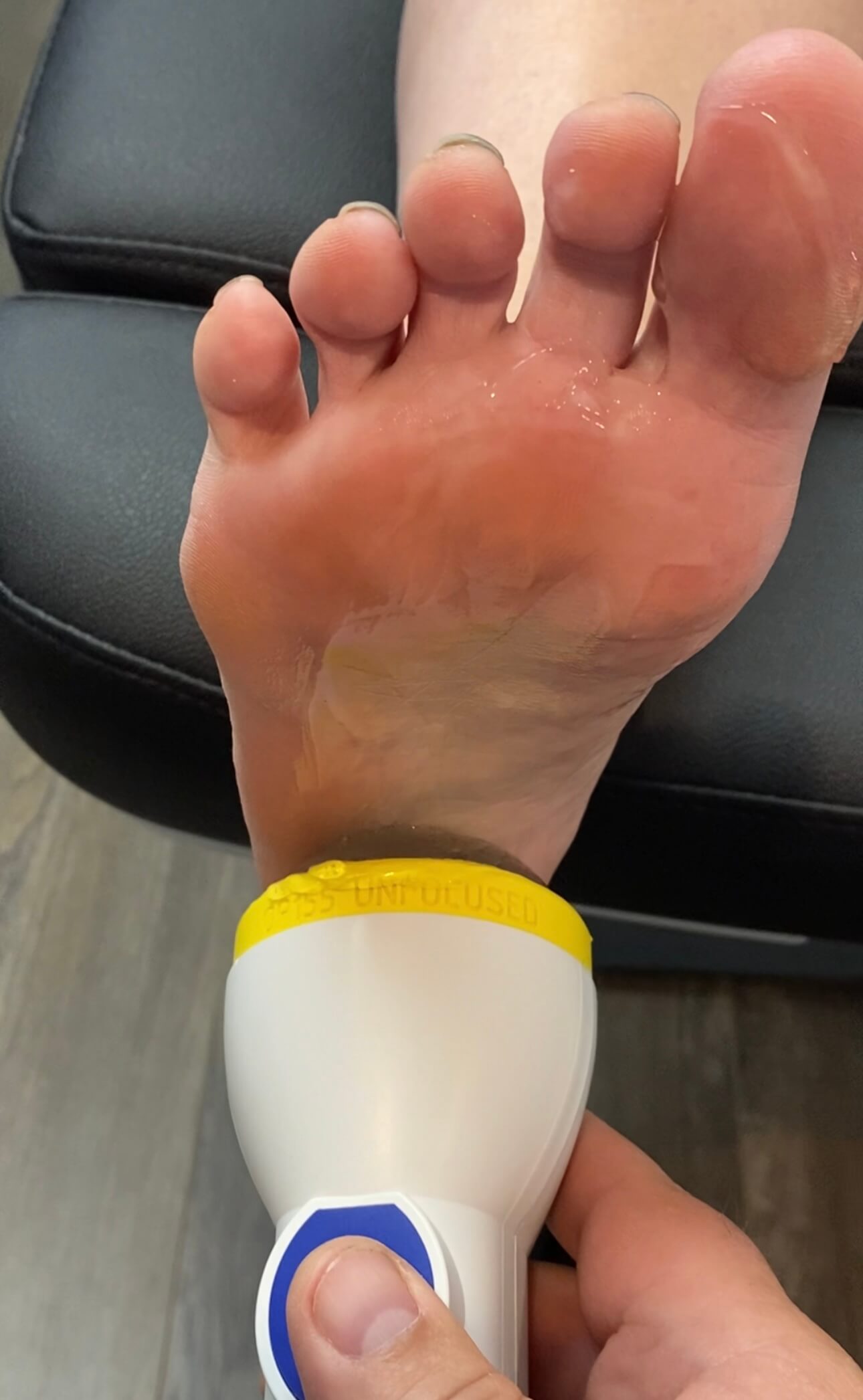
Plantar Fasciitis Treatment With Softwave TRT
Are you tired of waking up every morning with stabbing heel pain? Have you tried stretching, orthotics, anti-inflammatory medications, or even cortisone injections, only to have the pain return?
If you’re suffering from plantar fasciitis, you’re certainly not alone. This frustrating condition is one of the most common causes of heel pain, affecting active adults, runners, people who stand for long hours at work, and individuals simply trying to enjoy their everyday activities.
For many patients, the most discouraging part isn’t just the pain. It’s the feeling that nothing seems to provide lasting relief.
Fortunately, advances in medical technology are giving patients new options.
At Central Jersey Spine & Wellness in Freehold, NJ, Dr. Gerard DeBernardis offers SoftWave TRT, an advanced form of noninvasive shockwave therapy designed to stimulate biological processes involved in tissue repair and help relieve chronic musculoskeletal pain.
For patients looking to avoid repeated injections or surgery, SoftWave TRT may be an excellent option worth exploring.
What Is Plantar Fasciitis, and Why Does It Hurt So Much?
Plantar fasciitis develops when the plantar fascia, a thick band of connective tissue running along the bottom of your foot from your heel toward your toes, becomes irritated or develops degenerative changes.
The plantar fascia plays an essential role in supporting your arch and absorbing the forces generated when you walk, run, or stand.
Over time, repetitive stress can contribute to microscopic tissue damage and changes in the structure of the fascia.
Common symptoms include:
-
Sharp, stabbing pain underneath the heel
-
Severe discomfort with the first few steps in the morning
-
Pain after sitting or resting for extended periods
-
Heel pain after prolonged standing or walking
-
Tenderness along the bottom of the foot
-
Difficulty exercising, walking, or performing everyday activities
One particularly frustrating characteristic of plantar fasciitis is that symptoms may temporarily improve after walking around, only to return later in the day.
For some patients, the condition becomes chronic, lasting months or even years.
Why does plantar fasciitis sometimes become chronic?
Although the condition is commonly called plantar fasciitis, longstanding cases frequently involve degenerative tissue changes rather than inflammation alone.
This distinction matters.
If the underlying problem involves chronic tissue degeneration and impaired recovery, simply suppressing inflammation may not adequately address the condition.
That’s one reason treatments designed to stimulate the body’s natural repair processes have attracted considerable attention.
Traditional Plantar Fasciitis Treatments: Why Relief Doesn’t Always Last
Patients seeking plantar fasciitis treatment in Freehold, Manalapan, Marlboro, Howell, and surrounding communities are often offered a familiar selection of treatments.
Some are helpful, particularly in the early stages. However, patients with persistent symptoms may need additional options.
1. Anti-inflammatory medications
Over-the-counter medications such as ibuprofen and naproxen are commonly recommended for heel pain.
These medications can temporarily decrease pain and inflammation, making everyday activities more comfortable.
However, they do not directly repair damaged plantar fascia tissue.
Prolonged or frequent NSAID use can also carry risks, including gastrointestinal bleeding, kidney complications, and cardiovascular side effects, depending on the medication and patient’s medical history.
For patients seeking a longer-term solution, relying on medication alone may not be enough.
2. Stretching, physical therapy, and orthotics
Stretching exercises, physical therapy, supportive footwear, and orthotic devices can play important roles in managing plantar fasciitis.
In fact, evidence-based clinical guidelines recommend plantar fascia-specific stretching, calf stretching, manual therapy, and strengthening exercises. Orthotics can also be helpful when combined with other treatments.
Plantar Fasciitis: Revision 2023+1
But what happens when you’ve already tried these treatments and your heel still hurts?
For patients whose pain persists despite appropriate conservative care, additional treatment options deserve consideration.
3. Cortisone injections: Temporary relief with potential risks
Cortisone injections have been used for decades to treat plantar fasciitis.
Their primary purpose is to suppress inflammation and temporarily reduce pain.
For some patients, a cortisone injection provides meaningful short-term relief.
But there’s an important distinction:
Reducing pain is not necessarily the same as repairing the damaged tissue responsible for that pain.
Corticosteroids can also have adverse effects on connective tissue.
Potential complications of plantar fascia cortisone injections include:
-
Plantar fascia rupture: Corticosteroid exposure can increase the risk of weakening or tearing the fascia.
-
Heel fat pad atrophy: The protective cushioning beneath the heel can become thinner, potentially causing additional pain.
-
Temporary pain flare: Some patients experience increased discomfort following an injection.
-
Infection or local tissue injury: Uncommon but recognized injection-related complications.
A 2026 review published inAmerican Family Physician confirms that corticosteroid injections can offer short-term relief for plantar fasciitis while carrying risks including plantar fascia rupture and fat pad atrophy.
AAFP
These complications do not occur in every patient, and injections may still be appropriate in selected circumstances.
However, for patients considering repeated cortisone injections, understanding the potential risks is especially important.
If your goal is to recover from plantar fasciitis rather than repeatedly manage the pain, shouldn’t you also explore treatments that may support tissue recovery?
SoftWave TRT: A Different Approach to Plantar Fasciitis Treatment
SoftWave TRT represents a different approach to treating chronic heel pain.
Instead of relying on medications or injections to suppress symptoms, SoftWave TRT uses high-energy acoustic shockwaves to stimulate biological responses associated with tissue healing.
SoftWave TRT is an electrohydraulic, broad-focused form of extracorporeal shockwave therapy (ESWT).
During treatment, acoustic waves travel into the targeted tissues, creating mechanical stimulation that can influence cellular activity.
Research into shockwave therapy has identified several potentially beneficial biological effects, including:
-
Increased cellular signaling associated with tissue repair
-
Stimulation of pathways involved in new blood vessel formation
-
Modulation of inflammatory processes
-
Changes in pain signaling
-
Promotion of tissue remodeling and recovery
These biological effects are among the reasons shockwave therapy has become an important area of research for chronic tendon and fascia conditions.
Why is SoftWave TRT different from a cortisone injection?
A cortisone injection primarily attempts to reduce inflammation and pain.
SoftWave TRT attempts to stimulate biological processes that may help the injured tissue recover while also reducing pain.
That distinction is especially relevant for patients with chronic plantar fasciitis, where degenerative tissue changes may contribute to ongoing symptoms.
SoftWave TRT also offers practical advantages:
-
No needles or injections
-
No surgical incisions
-
No anesthesia typically required
-
No corticosteroid exposure
-
Brief outpatient treatment sessions
-
Minimal downtime for many patients
-
A noninvasive option for patients seeking to avoid surgery
Side effects are generally mild and temporary, such as soreness or redness, although treatment discomfort and other adverse effects are possible.
Results vary, and SoftWave TRT is not a guaranteed cure. Nevertheless, it offers an appealing option for appropriately selected patients who have not achieved sufficient relief from conventional treatments.
What Does the Scientific Research Say About Shockwave Therapy for Plantar Fasciitis?
One of the strongest reasons to consider shockwave therapy is that its use for plantar fasciitis is supported by multiple randomized clinical trials and systematic reviews.
Importantly, the following studies evaluate extracorporeal shockwave therapy as a treatment category. They do not establish that every shockwave device or protocol produces identical results.
Research highlight: Shockwave therapy versus cortisone injections
2024 SYSTEMATIC REVIEW AND META-ANALYSIS of 1,121 patients
Across 16 studies comparing shockwave therapy with corticosteroid injections
Researchers found that ESWT provided better average pain reduction and foot function at three and six months than corticosteroid injections.
Cortés-Pérez et al., Clinical Rehabilitation, 2024.
This finding is particularly important for patients who want more than temporary pain relief.
While cortisone injections may reduce symptoms relatively quickly, shockwave therapy demonstrated better outcomes at later follow-up points in this analysis.
Research highlight: 2025 meta-analysis of 15 studies
A systematic review published in Foot and Ankle Surgery analyzed 15 randomized trials involving 1,123 patients.
Researchers found that shockwave therapy significantly improved plantar fasciitis pain compared with placebo and produced better foot-function results than corticosteroid injections on one measured outcome.
The authors also noted that certain other treatments, including platelet-rich plasma, performed better on some measures.
This supports ESWT as a legitimate, evidence-based treatment option while reinforcing the importance of selecting treatment based on the individual patient’s needs.
Research highlight: Larger 2026 review
A 2026 systematic review and network meta-analysis evaluated 63 randomized controlled trials involving 4,170 participants.
The researchers found that shockwave therapy demonstrated benefits across multiple pain and functional outcomes and follow-up periods.
They concluded that treatment selection should be individualized rather than assuming that any single treatment is best for everyone.
Why Experience Matters When Choosing a SoftWave TRT Provider
Not every doctor offering shockwave therapy has the same level of experience, training, or equipment.
And when you’re investing your own money in treatment, those differences deserve consideration.
At Central Jersey Spine & Wellness, Dr. Gerard DeBernardis has performed more than 21,000 SoftWave TRT treatments, making him one of the most experienced SoftWave providers in the United States based on the practice’s reported treatment volume.
His qualifications include:
-
30 years of clinical experience treating musculoskeletal conditions
-
21,000+ SoftWave TRT treatments performed
-
ISMST Certified through the International Society for Medical Shockwave Treatment
-
Member of the American Society for Medical Shockwave Treatment (ASMST)
-
SoftWave Clinical Physician Trainer, helping educate other doctors across the country
-
One of New Jersey’s early adopters of SoftWave TRT technology
-
Hundreds of five-star patient reviews
-
Access to multiple advanced treatment technologies within one multidisciplinary practice
Dr. DeBernardis doesn’t simply offer SoftWave TRT as an additional service. He has made advanced noninvasive musculoskeletal treatment a central focus of his clinical practice.
That experience is especially valuable when evaluating patients who have already tried multiple treatments without success.
While experience cannot guarantee a particular outcome, it can help inform patient selection, treatment planning, and the appropriate use of technology.
SoftWave TRT Can Help Identify Areas of Heel Pain
One of the distinctive ways Dr. DeBernardis uses SoftWave TRT is through a process often referred to as pain mapping.
During treatment, the applicator is moved across the painful region of the foot.
Patients may notice that certain areas produce significantly more sensitivity than others.
This feedback can help the clinician identify tender regions and guide treatment toward areas of greatest discomfort.
For example, a patient may believe that all their pain is coming from a heel spur when the actual tenderness is concentrated around the plantar fascia attachment or surrounding soft tissues.
Although pain mapping is not a validated standalone diagnostic test and does not replace a medical examination or imaging when indicated, it can provide useful feedback during treatment.
Dr. DeBernardis combines this information with clinical findings to develop an individualized treatment approach.
Why Treating Plantar Fasciitis May Require More Than One Technology
At Central Jersey Spine & Wellness, the goal is not simply to offer a single treatment to every patient.
It’s to determine which combination of conservative treatments may provide the greatest benefit for that individual’s condition.
Depending on the patient’s examination and clinical needs, treatment recommendations may include SoftWave TRT along with other available technologies and rehabilitation approaches, such as:
-
EMTT (Extracorporeal Magnetotransduction Therapy): Uses high-energy electromagnetic pulses to stimulate tissue responses.
-
Class IV Laser Therapy: Uses therapeutic light energy to help manage pain and support tissue recovery.
-
Photobiomodulation: Uses red and near-infrared light to influence cellular processes.
-
Targeted stretching and rehabilitation: Addresses mobility restrictions, strength deficits, and mechanical stresses contributing to plantar fascia overload.
Not every patient needs all these treatments. Evidence for particular combinations also varies, so recommendations should be based on an individualized assessment.
Having access to multiple treatment options allows Dr. DeBernardis to develop a more comprehensive plan rather than applying the exact same protocol to everyone.
Who Is a Good Candidate for SoftWave TRT?
SoftWave TRT may be worth considering if:
-
You’ve experienced heel pain for several months or longer.
-
Your first steps in the morning are painful.
-
Stretching, orthotics, or physical therapy haven’t provided enough relief.
-
You’ve had a cortisone injection and the pain returned.
-
You want to avoid additional injections.
-
Your plantar fasciitis is interfering with walking, exercise, work, or recreational activities.
-
You’re looking for a noninvasive alternative before considering surgery.
Not all heel pain is caused by plantar fasciitis. Stress fractures, nerve entrapment, Achilles disorders, and other conditions may produce similar symptoms.
That’s why an appropriate evaluation is essential before starting treatment.
Frequently Asked Questions About Plantar Fasciitis and SoftWave TRT
Can SoftWave TRT help chronic plantar fasciitis?
Yes, shockwave therapy has demonstrated benefits for many patients with chronic plantar fasciitis in clinical research. Individual outcomes vary depending on the severity and duration of the condition, underlying biomechanics, and other factors.
Is SoftWave TRT better than a cortisone injection?
For some patients, particularly those seeking relief over several months, shockwave therapy may offer advantages. A 2024 meta-analysis found better average pain and functional outcomes with ESWT at three and six months. However, neither treatment is universally superior for every patient.
Is SoftWave TRT painful?
Patients may experience discomfort or sensitivity during treatment, especially over painful areas. Treatment intensity can generally be adjusted according to patient tolerance.
How many SoftWave treatments will I need?
The number of sessions depends on your condition, symptoms, clinical response, and treatment plan. Dr. DeBernardis can discuss an individualized recommendation after evaluating your foot.
Does SoftWave TRT require downtime?
Most patients can resume many normal daily activities soon after treatment. Temporary soreness may occur, and patients may be advised to modify strenuous activities while recovering.
Can plantar fasciitis heal without surgery?
Absolutely. Many cases improve with conservative treatments such as stretching, strengthening, footwear changes, and activity modification. Shockwave therapy provides an additional nonsurgical option for persistent symptoms.
Where can I find SoftWave TRT for plantar fasciitis near Freehold, NJ?
Central Jersey Spine & Wellness offers SoftWave TRT at its Freehold office, conveniently serving patients from Manalapan, Marlboro, Howell, Jackson, Englishtown, Farmingdale, and surrounding Central New Jersey communities.
Stop Letting Heel Pain Control Your Life
Imagine waking up in the morning without dreading those first few steps.
Imagine being able to walk, exercise, work, shop, or spend time with your family without constantly thinking about your heel pain.
For patients suffering from chronic plantar fasciitis, finding the right treatment can make a meaningful difference in quality of life.
If you’ve already tried medications, orthotics, stretching, or cortisone injections without lasting relief, it may be time to explore another option.
Before you consider another injection or surgery, find out whether SoftWave TRT could help you.
With more than 30 years of clinical experience, over 21,000 SoftWave TRT treatments performed, and advanced training in shockwave therapy, Dr. Gerard DeBernardis offers patients extensive experience in evaluating and treating chronic musculoskeletal pain.
Schedule Your Plantar Fasciitis Consultation in Freehold, NJ
Central Jersey Spine & Wellness, LLC
Dr. Gerard DeBernardis, DC
4251 US Highway 9 North
Building 3, Suite B
Freehold, NJ 07728
732-683-1800
Call to Schedule a Consultation Serving Freehold, Manalapan, Marlboro, Howell, Jackson, Englishtown, Farmingdale, and surrounding Central New Jersey communities.
Medical disclaimer: This article is for educational purposes and does not replace an individualized medical evaluation. SoftWave TRT may not be appropriate for every patient, and treatment outcomes cannot be guaranteed.